
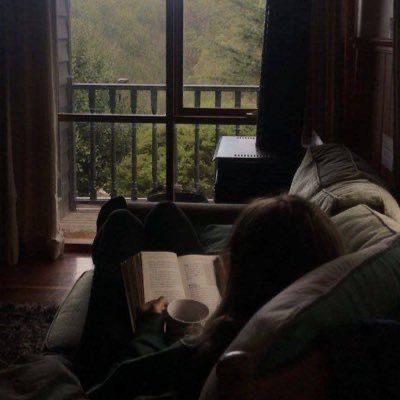
It was late at night and I sat in the dimly lit room with Sophie’s World, by Jostein Gaarder, resting on my lap. Just as I told myself I’d read only one more chapter, I stumbled upon a concept that froze me — not out of fear, but because of a truth I hadn’t expected:
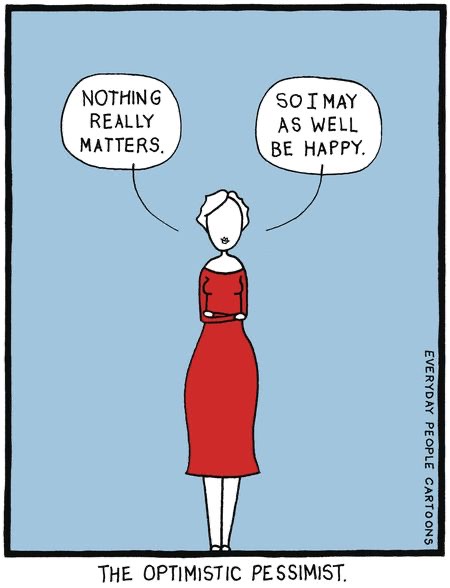
“Maybe nothing has a predetermined meaning.”
I felt uneasy.
If nothing has meaning, then why do we try? Why do we get up every morning? Why do we learn, love, have children?
Unlike classical nihilism, which sees emptiness, despair, or chaos in that lack of meaning, positive nihilism says:
Because nothing is predetermined, you are free to create your own meaning.
Then came a quiet relief, like a soft spring evening.
And I understood — maybe that’s exactly the point.Because nothing is guaranteed, every little thing becomes sacred. Because there is no “true” purpose, my life can be whatever I choose it to be.
That’s what positive nihilism is.
Not the rejection of everything — but the acceptance that the world doesn’t owe us answers.
There is no universal goal. But there is a small, personal meaning we create each day — in silence, in chaos, in the tiniest of moments.
Like when my baby rests her head on my chest. When I remember to take a deep breath in the morning. When I make coffee and savor its smell as a ritual of gratitude.
There was a time I believed I had to achieve something big for my life to be worthy.
Now I know — it’s not about the outcome. It’s about the experience. Purpose isn’t a destination. Purpose is a feeling.
And maybe we’ll never truly know why we’re here. But maybe that’s not the point.
Maybe it’s enough that we love. That we care. That we fall and get back up. That we make someone breakfast, quiet someone’s fears, bring back someone’s smile.
In Sophie’s World, the main character searches for the answer to one question:
Who am I?
And with each new thought, she doesn’t find a final answer — but she finds freedom.
So can I.
So can you.
So can all of us.
We can let go of the idea that life has to have a grand meaning.
Instead, we can give it meaning — one that is even greater, even deeper.
Because maybe, just maybe — when we free ourselves from expectations, from rules, from fear — we realize the most important truth:
Life doesn’t have to last forever to be valuable.
It doesn’t need a grand finale to have depth.
It doesn’t need an answer to be meaningful.
————————————
Pozitivni nihilizam– sta je to zapravo?
Bilo je kasno uveče, a ja sam ostala u polumraku sobe sa knjigom Sofijin svet, od Jostein Gaarder-a, u krilu. I taman kad sam pomislila da ću pročitati još samo jedno poglavlje, naišla sam na pojam- pozitivni nihilizam i rečenicu koja me potpuno zaledila — ne zbog straha, već zbog istine koju nisam očekivala:
„Možda ništa nema unapred zadat smisao.“
Osetila sam nelagodu.
Pa ako ništa nema smisao, zašto se onda trudimo? Zašto ustajemo svakog jutra? Zašto učimo, volimo, rađamo decu?
Za razliku od klasičnog nihilizma koji u toj “besmislenosti” vidi tugu, beznađe ili haos, pozitivni nihilizam kaže:
Pošto ništa nije unapred određeno – ti imaš slobodu da sam(a) stvoriš svoj smisao.
Onda je naišlo olakšanje, kao tiho prolećno veče.
Shvatila sam — možda baš zato.
Zato što ništa nije garantovano, svaka sitnica postaje svetinja.
Zato što ne postoji „prava“ svrha — moj život može da bude baš ono što ja izaberem da bude.
To je pozitivni nihilizam.
Ne odbacivanje svega, već prihvatanje da nas svet ne duguje objašnjenja.
Da nema univerzalnog cilja.
Ali zato postoji mali, lični smisao koji stvaramo svakog dana — u tišini, u haosu, u malim trenucima.
Kad moja beba stavi glavu na mene. Kad se ujutru setim da udahnem duboko. Kad skuvam kafu i osetim njen miris kao ritual zahvalnosti.
Nekada sam mislila da moram nešto veliko da uradim da bi moj život imao vrednost.
Danas znam da nije do rezultata.
Doživljaj je poenta.
Svrha nije cilj. Svrha je osećaj.
I možda nikada nećemo saznati zašto smo ovde.
Ali možda to i nije važno. Možda je dovoljno što volimo. Što brinemo. Što padamo, pa ustajemo. Što nekome pravimo doručak, nekome ućutkamo strah, nekome vratimo osmeh.
U Sofijinom svetu, glavna junakinja pokušava da odgovori na pitanje:
Ko sam ja?
I kroz svaku novu misao, ona ne dobija odgovor — ali dobija slobodu.
I ja.
I ti.
Svi mi možemo da pustimo ideju da život mora imati veliki smisao.
Možemo umesto toga izabrati da mu damo smisao. Mnogo već i mnogo dublji.
Jer možda baš tada — kad se oslobodimo očekivanja, tuđih pravila i strahova — shvatimo ono najvažnije:
Život ne mora da traje večno da bi bio vredan.
Ne mora da ima kraj da bi imao dubinu.
Ne mora da ima odgovor da bi imao značenje.

 Tanja's diary 🧚🏻♂️